

Stepping towards a mountain of stone, representing a story of cultural history, and much bigger than a 40-story building, constructed without the use of any mechanical or technological advancements. Curious, where are you? Meet a symbolic and remarkable icon, the Great Pyramid of Giza. This is not only a structure of limestone, but this is something that admires the ancient workforce of humans, like an old skyscraper. Making scientists, manufacturers, and engineers in suspense, this is called a mystery.
The Great Pyramid of Giza, built for Pharaoh Khufu (Cheops) around 2550 BCE, is the largest of all Egyptian pyramids and the only surviving Wonder of the Ancient World. Originally rising to about 146.6 m (481 ft), its precision is staggering: perfectly aligned with the cardinal points, constructed with millions of limestone blocks, and engineered with breathtaking accuracy.
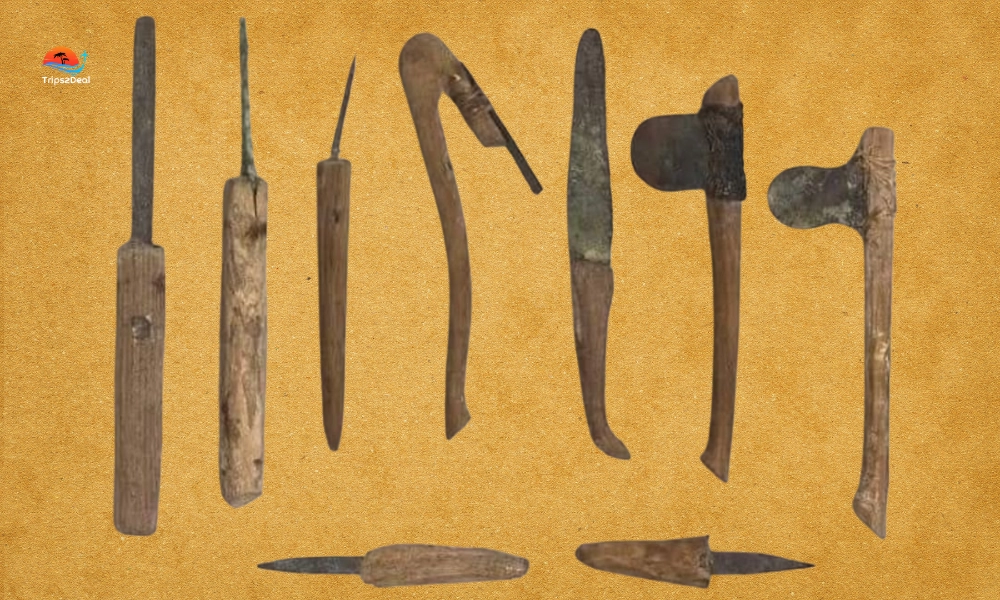
Modern science hasn’t stayed away. Tools like laser scanning, radiocarbon dating, muon tomography, and micro-archaeology are giving us fresh insights into how this marvel was planned and built. Forget the alien myths, archaeological evidence shows it was human brilliance at work: copper tools, wooden sledges, ingenious ramps, levers, and extraordinary organization.
Today, visitors can walk the Giza Plateau, step inside Khufu’s pyramid on guided routes, and marvel at treasures like the Solar Boat, an ancient ship buried beside the pyramid, now displayed in a modren Grand Egyptian Museum nowdays.. But with mass tourism, humidity, and Cairo’s ever-growing sprawl, conservation has become just as important as discovery.
The Great Pyramid is more than stone and mortar. It’s a story of ambition, innovation, and endurance, the ultimate reminder of what humans can achieve when vision meets willpower.
The Great Pyramid of Giza is the monumental tomb of Pharaoh Khufu (Greek: Cheops), ruler of Egypt’s Fourth Dynasty in the Old Kingdom (ca. 26th century BCE). It crowns the Giza Plateau near modern-day Cairo and anchors a massive funerary complex including subsidiary pyramids, mastaba cemeteries, boat pits, causeways, and the Valley Temple. Besides its symbolic and religious roles, the pyramid showcased royal authority, organization, and engineering prowess at a scale unmatched for centuries.
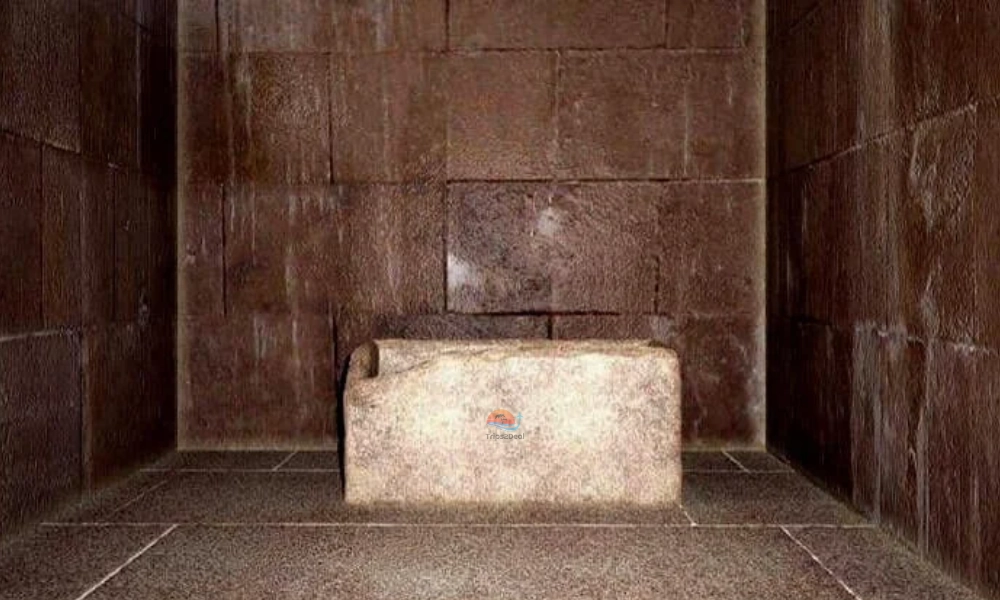
The Great Pyramid of Giza is not just impressive because of its age; it’s a masterpiece of scale and precision. Every measurement reveals how carefully planned and skillfully executed this monument was, especially considering the tools and technology available more than 4,500 years ago.
These values reflect consensus ranges from major Egyptological syntheses and surveys; slight variations exist based on measurement methods and which stone surfaces are used as reference.
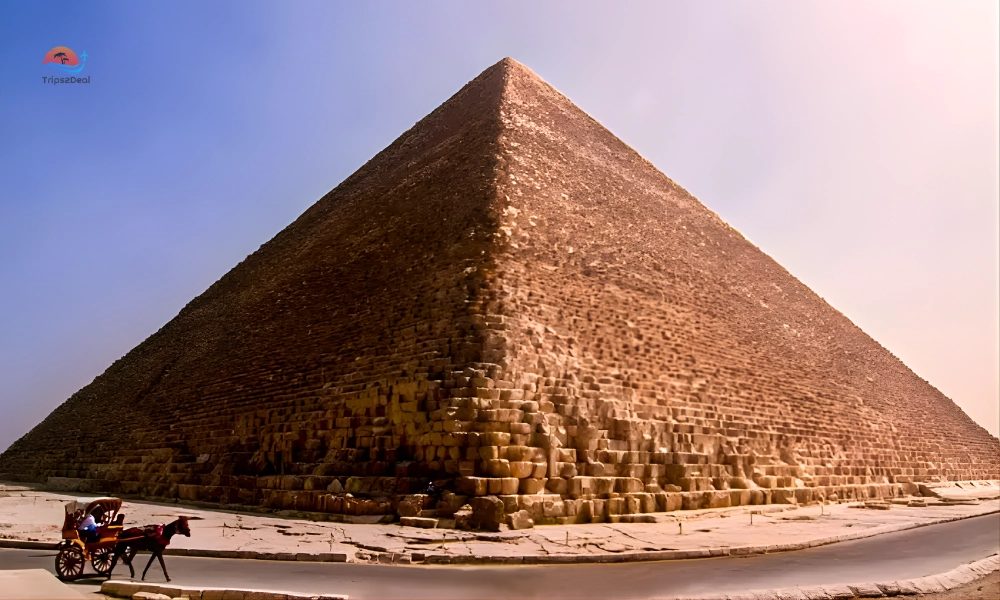
When Khufu (also known by the Greek name Cheops) came to power around 2589 BCE, he inherited not just a throne but also a legacy of experimentation in stone architecture. His father, Sneferu, had already transformed the pyramid building from the clumsy step design of earlier kings to smooth-sided pyramids like the Bent and Red Pyramids at Dahshur. Khufu took these lessons and pushed them to their absolute limit, commissioning what would become the most ambitious stone monument in history: the Great Pyramid.
The period in which Khufu ruled, the Fourth Dynasty of Egypt’s Old Kingdom, is often described as the “Golden Age of the Pyramids.” During this era, architecture, administration, and ideology aligned to create monumental projects that symbolized the king’s divine authority and Egypt’s centralized power.
In short, the Great Pyramid was not an isolated achievement; it was the climax of decades of trial and error, dynastic ambition, and a worldview that sought to anchor heaven on earth.
Archaeological finds at Heit el-Ghurab (workmen’s village) and nearby cemeteries indicate a professional labor force supplemented by rotating crews from across Egypt, not enslaved masses. Diet remains (fish, beef, bread, beer) suggest managed provisioning. Pottery, administrative marks, and graffiti with crew names (e.g., “Friends of Khufu”) attest to crew identities and pride.
Ramp theories range from straight linear ramps to switchback/zigzag or spiral segments. The leading view is hybrid logistics: a substantial frontal ramp for early courses, then internal ramps, campuses, or platforms for higher tiers. Fine setting relied on levers, cribbing, and meticulous bedding surfaces, verified with plumb bobs and copper/wood tools. Tool marks align with copper chisels, dolerite pounders, and abrasion techniques.
The Great Pyramid wasn’t just about brute strength; it was about precision, ingenuity, and a deep understanding of materials. Ancient Egyptian builders carefully selected and combined local and imported resources, while refining tools and engineering tricks that were astonishing for their time.
In essence, the pyramid’s construction was a perfect marriage of material science, engineering foresight, and relentless human labor. Every stone, joint, and shaft reveals the Egyptians’ ability to think like both architects and problem-solvers.
While the Great Pyramid looks solid, it contains an internal network:
Visitor routes today typically use a modern entry created in the 9th century CE and a defined sequence through the Ascending Passage and Grand Gallery to the King’s Chamber (subject to management policies).

The sides of the pyramid align closely with true north, south, east, and west, with typical errors measured in arcminutes, an extraordinary achievement. Methods likely included circumpolar star observations (e.g., simultaneous transit methods) and solar shadow techniques to refine cardinal points. The air shafts may reference specific circumpolar or royal stars, aligning mortuary ideology with the sky: resurrection, celestial sailing, and eternal kingship.
The primary function was the royal tomb. The pyramid’s form embodied creation and resurrection themes: the benben (primordial mound), solar rebirth, and the king’s ascension to the gods. The complex, valley temple, causeway, mortuary temple, boat pits, supported ritual movement from the Nile to the plateau and sustained the king’s cult of eternity.
While some argue for additional symbolic or astronomical functions, the core funerary role is overwhelmingly supported by comparative archaeology, inscriptions, and temple architecture across Old Kingdom sites.
Challenges include:
Responsible tourism means staying on marked paths, respecting site rules, avoiding touching ancient surfaces, and supporting reputable local services.
Accessibility note: Interior passages are steep and confined; consider comfort and mobility before entering.

The Great Pyramid has earned its name in mystery, endurance, and gentleness. It represents the story of:
It remains a touchstone in debates about ancient knowledge, statecraft, and human ingenuity, and a focal point of national heritage for Egypt.
Like others, you also get curious, how could people 4,500 years ago discover the Great Pyramid so unique and advanced without any digital tools? Nowadays, cutting-edge technology and modern tools are unveiling the mystery behind this archaeology. Let’s deep dive, actually, what’s the reality:
Always remember, science does not murder the suspense or mystery, but it raises a story of exploration and discovery. This is the reason the Egyptian has a strong bond of ingenious problem-solving with deep knowledge.
The Great Pyramid is not just an ancient piece, but it’s a living icon and a historical presenter of Egypt. Each year, millions of visitors plan a tour to Giza, as this is one of the most famous archaeological sites in the world, and every tourist admires its structure.
Moreover, the Great Pyramid is not only a legacy and history, but it also depicts the identity, culture, and pride of the Egyptians.
Myth 1: Built by slaves.
Archaeology indicates that paid, provisioned workers organized into crews, with supporting villages and cemeteries. Seasonal and professional labor combined under state administration.
Myth 2: Alien technology or impossible precision.
Ancient Egyptian tools + time + organization explain the observed accuracy. Precision is notable but remains within human capability using known methods.
Myth 3: Perfectly smooth interior/exterior at micron levels.
The casing stones were masterfully cut, but claims of “laser-like” perfection were exaggerated. Variability exists; clever field techniques (not magic) created tight joints.
Myth 4: A power plant or grain silo.
No archaeological evidence supports industrial or non-funerary primary functions; textual and architectural parallels support a tomb-complex interpretation.
Myth 5: No inscriptions prove Khufu built it.
Builder marks and crew graffiti inside the relieving chambers directly connect Khufu to the monument.
If you’re a history seeker, looking forward to an ancient monument? Meet the Great Pyramid of Giza, this is not only an archeological wonder, but it also represents the dedication, ambition, and innovation of human beings' talent. This is an outstanding structure made up of copper tools, limestone blocks, and a strengthened firm. This is the reason it still matters to the world because of the only surviving Wonder of the Ancient World. If we consider the ancient workforce of Khufu and today’s scientists with their advanced artificial intelligence technology, every century and every era adds its part in sustaining it.
For travelers who come from different regions of the world, the Great Pyramid delivers something heart-welcoming. Moreover, it offers a repetition of history once again, which creates an imaginable story in each mind. For researchers who are seeking knowledge, they dive into this location, as this spot offers a modern laboratory of engineering and cultural meaning. However, for Egypt and its locals, it is actually a proud legacy and a global tourism spot.
While in the universe of modern technologies like skyscrapers and megaprojects, the Pyramid of Giza still stands out as unique. This is not a piece of landmark only, but this is a storyteller icon realizing that the life before machines and digital tools, humans still won the game. This seems impossible now, that humans are capable of achieving this.
Q1: Why is it called the “Great” Pyramid?
Because it’s the largest pyramid in Egypt by volume and height, anchoring the Giza trio and the only surviving Ancient Wonder.
Q2: Who built it?
Pharaoh Khufu (Cheops) of the Fourth Dynasty. Builder marks inside upper chambers refer to Khufu’s teams.
Q3: How long did it take to build?
Estimates vary; a couple of decades is typical in scholarly modeling, factoring in quarrying, transport, and seasonal labor cycles.
Q4: What tools did they use?
Copper chisels/saws/drills, dolerite pounders, wooden sledges/levers, ropes, and stone/wood measuring instruments.
Q5: Can I go inside?
Usually, yes, with a separate ticket and at designated times. Expect steep, narrow passages and a warm interior climate.
Q6: What are the “air shafts”?
Narrow channels from the King’s and Queen’s Chambers. Some open to the exterior; others end internally with blockings/doors. Likely symbolic/astral, not for ventilation in the modern sense.
Q7: Was it perfectly smooth?
It was originally clad in polished Tura limestone. Over time, the casing was largely removed; the core we see today is stepped and rougher.
Q8: How precise is the alignment?
Edges deviate from true cardinal directions by small arcminutes, astonishing accuracy for pre-modern surveying.
Q9: Are there still undiscovered rooms?
Non-destructive methods (like muon tomography) have revealed voids; research continues under careful supervision.
Q10: Did aliens help?
No credible evidence supports that. The human, archaeological, and experimental record suffices to explain the pyramid.
© 2025 trips2deal. All rights reserved