![Hurghada Museum]()
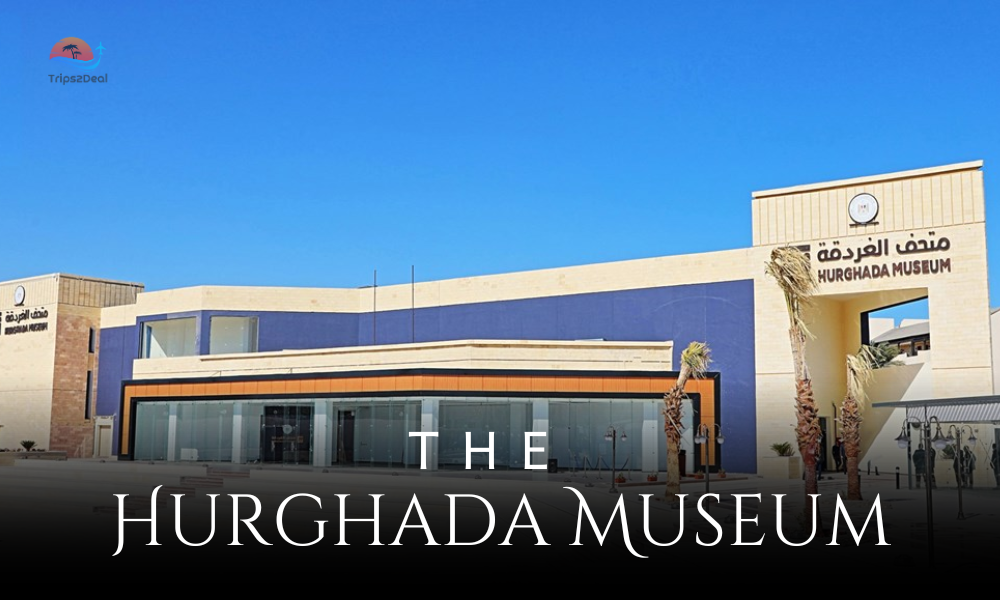
Roaming in the streets of Egypt when you think of Hurghada, images of coral reefs, scuba diving, and sunny beaches often come first. Hurghada Museum offers a rich and compelling counterpoint, ever situated away from the shore. This is a place where Egypt’s deep history meets local identity in the Red Sea Governorate. The museum is the first landmark symbol museum in that governorate that was opened in 2020. Moreover, it attracts thousands of tourists looking for traditions, cultures and Islamic civilization at a single place.
This guide delivers comprehensive details on Hurghada Museum’s story, tells the visitor insights, strengths & challenges, and a modern vision for its future.
Founding & Significance
The Genesis & Public-Private Model
Hurghada Museum is notable not only for being the first antiquities museum in the Red Sea Governorate, but also because of how it was built. Its construction was funded entirely via private sector investment, in partnership with the Ministry of Tourism and Antiquities and the Red Sea local government. This unusual model underrates a shift in Egyptian cultural infrastructure toward more collaborative approaches.
It is officially opened in 2020, with a mission to celebrate beauty through Egypt’s history.
Location & Layout
The museum is located on El-Nasr Road, roughly 8 km from Hurghada’s marina / downtown area. Because it lies outside the dense city core, visitors often reach it by taxi or shuttle that almost takes 20 minutes.
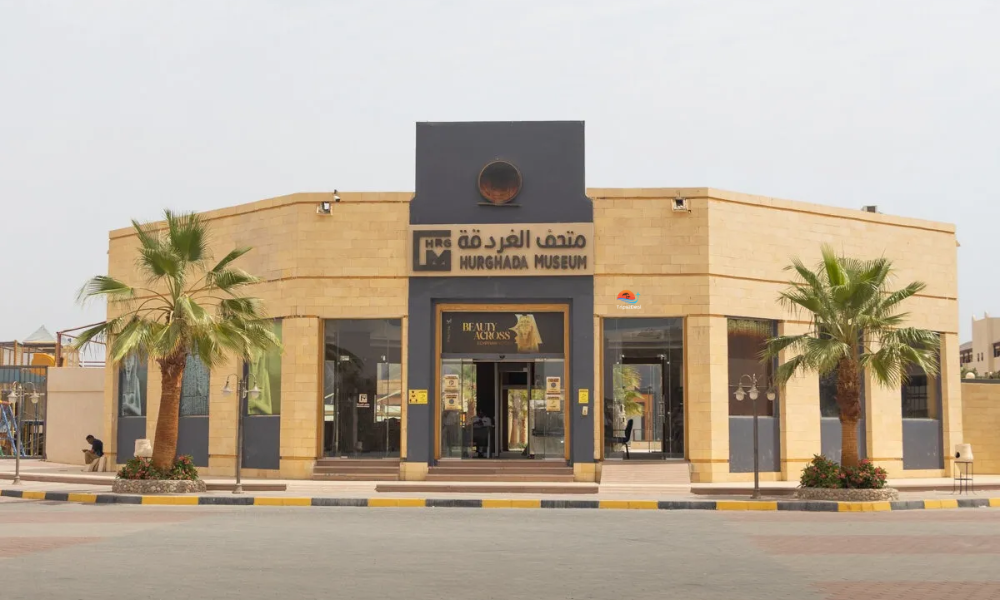
Architecturally, the building contains two stories: the ground floor is occupied by shops, boutiques, and a small commercial area. While the second floor houses the exhibition galleries. The exhibition space spans about 3,000 m².
Exhibits & Collections: Journey Through Time
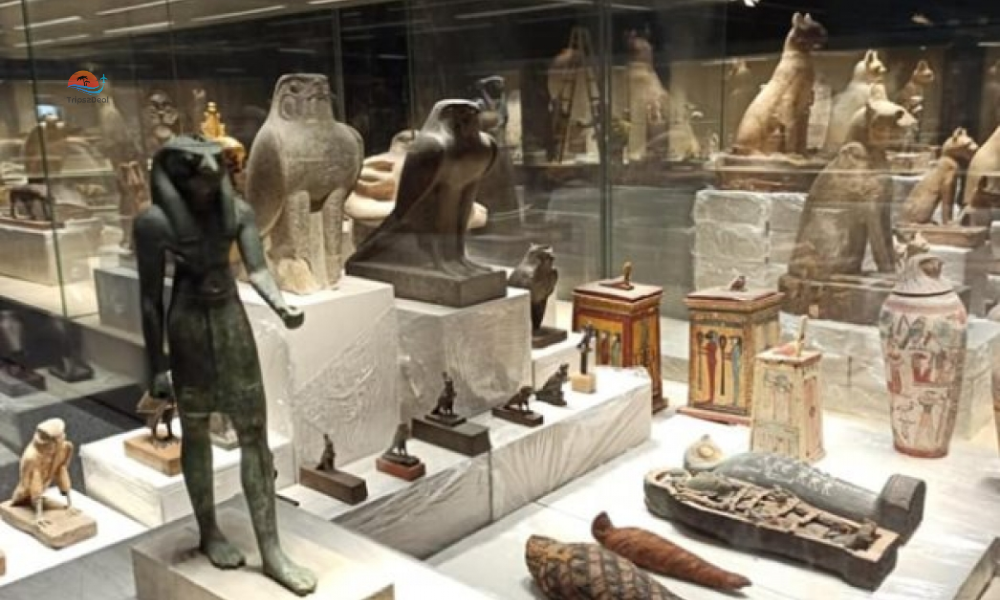
Hurghada Museum holds approximately 2,000 artifacts. This offers a sweeping narrative of Egyptian civilization across time and cultures. The arrangement is thematic and unparalleled, showing the beauty, in many forms.
Here’s what visitors can expect:
Pharaonic & Ancient Egyptian Section
- One standout piece is the statue of Merytamon, daughter and later Great Royal Wife of Ramesses II.
- Religious artifacts include a gilded statuette of Ptah; the god of Memphis with a faience cap and bronze scepter.
- Shabti figures; funerary servants from tombs are also exhibited.
- The museum reportedly has artifacts from Tutankhamun’s tomb on temporary display, although many are destined for the Grand Egyptian Museum known as GEM.
- Other objects include unmatchable elements, hieroglyphic inscriptions, statuary, and royal regalia.
Greco-Roman, Coptic, Islamic & Modern Periods
- The museum does not limit itself to ancient Egypt. Visitors see works from Greco-Roman Egypt, Coptic/Christian and Islamic eras, and sometimes more modern works.
- These include religious icons, jewelry, pottery, ceramics, inscriptions, and everyday artifacts.
- The museum also contains basalt pots, musical instruments, perfumes, kitchen tools, fishing implements.
Thematic Focus & Interpretation
A central curatorial motif is “the concept of beauty in Egypt”. This demonstrates how ideals of aesthetics, religious symbolism, and craftsmanship evolved through eras. Interpretation of artifacts is multilingual. They include Arabic, English, German, Russian languages to attract diverse tourists. Signage, explanatory panels, and lighting aim to enhance visitor engagement.
Visiting Hurghada Museum: Tips & Practicalities
Hours & Access
- The museum is open daily, typically 10:00 AM to 1:00 PM, then 5:00 PM to 11:00 PM, with a midday closure.
- Entrance closes about an hour before the museum’s official closing time.
- Because of its location outside central Hurghada, plan for travel time and possibly limited taxi availability upon leaving.
Admission & Fees
- The standard adult ticket is 200 EGP, and children often pay 100 EGP.
- Children below 6 years often enter for free.
- Egyptian citizens 60+ and persons with special needs may also get free entry.
Duration of Visit
- Most visitors spend 1 hour, although history or art enthusiasts may take longer, from 1.5 -- 2 hours.
- Because the showcases are compact, pacing yourself ensures you see everything.
Visitor Flow & Experience
- Entry sequence: You pass through the outer grounds, then some shops/souvenir area before ascending to the exhibition floor.
- The museum is relatively new, and visitor volumes are often modest. This shows that crowding is rarely a problem.
- Photography is generally permitted without flash, as individual policies can vary.
Best Time to Visit
- Evening hours after 5 PM can be pleasant, cooler, and less busy.
- Avoid high midday sun if traveling in summer; although inside the museum you're sheltered, the walk and external areas may be exposed.
Private
Hurghada City Tour
With Tour Guide
Strengths, Weaknesses & Challenges
What Works Well
1. Cultural Decentralization
- By establishing a museum outside Cairo/Luxor, Hurghada Museum helps distribute Egypt’s cultural offerings more evenly.
- Locals and tourists in the Red Sea region gain access to antiquities without long-distance travel.
2. Thematic Cohesion & Narrative
- The concept of beauty unites otherwise disparate historical periods, providing a coherent narrative arc.
- Multilingual interpretation allows global visitors to engage meaningfully.
3. Modern Facilities & Design
- As a recent build, the museum features modern lighting, climate control, and exhibition design.
- The public-private funding model shows institutional innovation.
4. Strategic Tourism Value
- Adds depth to Hurghada’s appeal beyond diving and beach tourism.
- Encourages tourists to stay longer, explore culture, and visit at night given evening hours.
Challenges & Constraints
1. Visibility & Access
- Some tourists simply do not know about it or lack transport to get there easily.
- Signage from main roads may be weak.
2. Scale & Expectations
- Compared to great museums in Cairo, Luxor or Aswan, Hurghada Museum is relatively small. Tourists expecting huge collections might feel underwhelmed.
- Some reviews mention that shops and retail areas overshadow museum space.
3. Conservation & Maintenance
- Showpieces, especially ancient, fragile ones require careful climate control, security, and ongoing conservation efforts.
- Balancing public access with artifact preservation is always delicate.
4. Competition & Artifact Movement
- Some valuable artifacts on loan may later be moved to the Grand Egyptian Museum (GEM), which may affect display continuity.
- Competing with larger established museums for prestige, funding, and attention is a hurdle.
Future Vision & Development Directions
To evolve from a promising regional museum into a cultural landmark, here are strategic possibilities and recommendations:
1. Expand Collections & Rotating Exhibitions
- Bring in temporary / traveling exhibits: For instance, a thematic shows from European or Egyptian institutions to refresh visitor interest periodically.
- Acquire or display more rare items, especially local artifacts from the Red Sea region, to further local identity and appeal.
2. Deepen Engagement with Technology
- Introduce augmented reality (AR) / virtual tours so visitors can see reconstructions, tomb interiors, or “before & after” layering of artifacts.
- Use QR codes or mobile apps for multilingual voice guides, behind-the-scenes stories, and multimedia content.
3. Improve Access & Transport Links
- Partner with hotels, tour operators, and transit services to offer fixed shuttle routes timed with museum hours.
- Better roadside signage, promotional materials, and mapping in tourist brochures.
4. Enhance Visitor Comfort & Amenities
- Create shaded outdoor spaces, gardens or terraces around the museum to extend visitor stay.
- Café or lounge spaces with views, plus relaxation areas, especially for evening hours.
5. Educational & Community Outreach
- This offers school programming, archaeology camps, lectures, workshops for local youth and tourists alike.
- Artist residencies, local exhibit tie-ins like Red Sea heritage, maritime archaeology to ground the museum in local culture.
6. Sustainability & Conservation Excellence
- Invest in top-tier climate control, security, and conservation labs to preserve delicate artifacts.
- Explore solar power, eco-lighting, and sustainable studio practices for operations.
7. Marketing & Positioning
- Position the museum as a cultural anchor of Red Sea tourism. After the dive, discover the past.
- Use social media, travel influencers, and partnerships with international museum networks to raise your profile.
- Host special evening events such as museum nights, lecture series, live performances to bring locals and tourists after dark.
Conclusion: Explore the Hurghada Museum, a Cultural Beacon
Do you know the Hurghada Museum is one of the significant landmark symbols in the culture and history of Egypt. This gets high rank in comparison to the national museums, because of its strong vision, and strategic planning and contribution to tourism.
Using modern technologies, stronger transport links, and deeper community engagement, Hurghada Museum has the potential to become a must-visit for travelers. This has been among the top learning hubs of the region, because they are improving its model for future museum tourists.
It does not matter if you are a history-seeker, traveller, or tourist, always remember to explore the Hurghada Museum. This represents an unparalleled showpiece that admires the beauty of Hurghada Museum. Don’t miss the chance, go and grab the ticket to refresh yourself in Egypt on weekends.