

Saint Shenouda Church usually refers to a Coptic Orthodox parish church dedicated to Saint Shenouda the Archimandrite, also called Shenoute of Atripe or Shenouda the Great. You’ll find churches with this dedication in Hurghada and across Egypt and in the global Coptic diaspora, often because Shenouda is one of the most influential saints in the Coptic tradition, especially for monastic life, spiritual discipline, and Coptic Christian identity.
Below is an in-depth guide on who Saint Shenouda was, what a Coptic Orthodox Saint Shenouda Church typically looks like, how it worships, and what the data says about the community behind it.
1) Who is Saint Shenouda, and why do so many churches carry his name?
A monastic leader who shaped Coptic Christianity
Saint Shenouda lived in late Roman Egypt (4th–5th century). Scholarly and church sources commonly place his leadership around 385–465 CE, when he became head of a major monastic federation linked to what’s known today as the White Monastery in Upper Egypt.
What makes him stand out:
- Builder of a massive monastic movement: One historical summary notes that the White Monastery community under Shenouda grew dramatically, reporting thousands of monastics, including 2,200 monks and 1,800 nuns during his long tenure.
- Major Coptic writer and preacher: Academic material highlights Shenouda as one of the most important early writers in Coptic, leaving a large body of sermons and letters that influenced theology, ethics, and community life.
- A symbol of spiritual clarity and discipline: In the Coptic imagination, Shenouda represents a faith that is both deeply spiritual and intensely practical, structured prayer, repentance, service, and perseverance.
That’s why a Saint Shenouda Church is not just a building name, it’s a statement of values: seriousness in worship, strong teaching, and continuity with Egypt’s monastic roots.
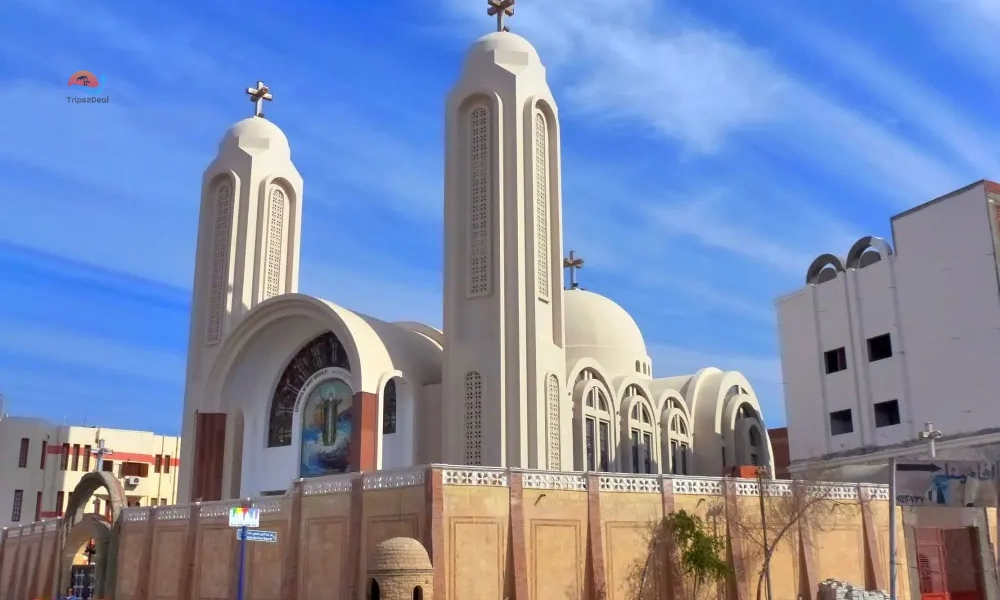
2) What does Coptic Orthodox mean?
The Coptic Orthodox Church of Alexandria is the principal Christian church in Egypt and one of the ancient churches of the Middle East and Africa.
Key facts:
- Ancient roots: It traces its apostolic foundation to St. Mark the Evangelist, traditionally connected with the early Christian community in Alexandria.
- Oriental Orthodox family: Coptic Orthodoxy belongs to the Oriental Orthodox communion (distinct from Eastern Orthodox). A major distinguishing point is that Oriental Orthodox churches accept the theological definitions of the first three ecumenical councils, not Chalcedon (451).
- Language and liturgy: Worship uses a mix of Coptic (the last stage of the ancient Egyptian language written with Greek letters plus signs) and Arabic in Egypt, with increasing use of English/French/etc in diaspora parishes.
3) The Saint Shenouda Church as a parish: what happens inside?
While every parish differs by country and size, most Saint Shenouda churches share a recognizable Coptic Orthodox parish pattern:
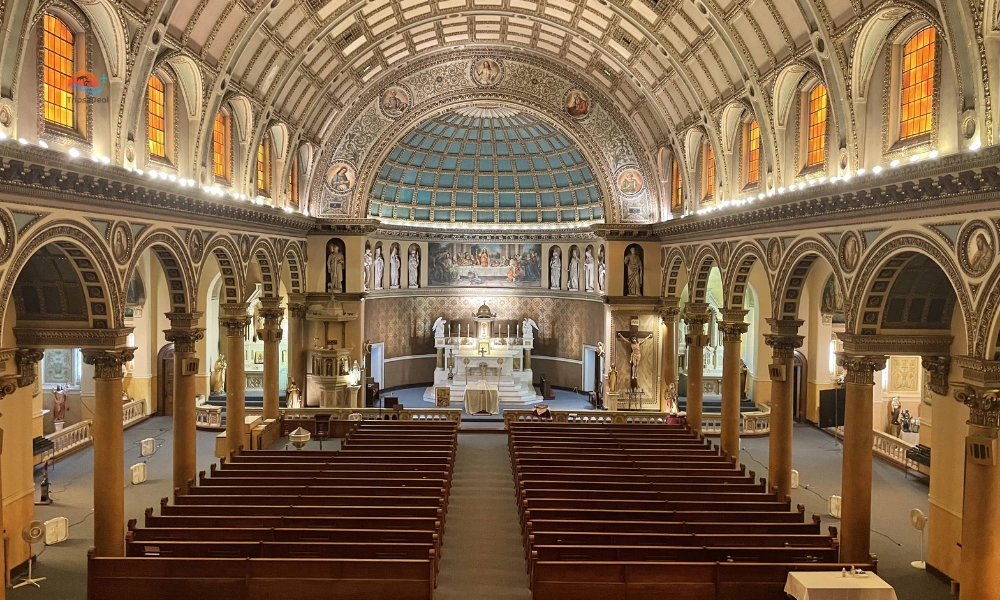
A) The worship life: The heart of the church
- Divine Liturgy (Eucharist): The main Sunday service is long, often 2–3+ hours, highly structured, and includes chanting, incense, scripture, and communion.
- Coptic hymnody: Many parishes preserve traditional melodies and teach them through youth and deacon programs.
- Fasting rhythm: The Coptic calendar includes extended fasts (e.g., Great Lent), shaping parish life and community practice.

B) The building layout (common features)
Many Coptic churches, especially those built or renovated as Coptic parishes, include:
- Sanctuary: altar area separated by a screen, often with icons
- Iconography: saints, Christ, Mary, angels
- A strong processional feel like incense, candles, movement
C) Community functions
Saint Shenouda churches often become community anchors, especially for immigrant families, providing:
- Sunday School for children and teens
- Youth meetings provide spiritual and social support
- Family counseling and service ministries
- Language and heritage preservation deliver Coptic hymns and culture
4) Where do we see Saint Shenouda churches? Examples with concrete facts
Because Saint Shenouda Church is a dedication used in many places, it helps to look at examples:
Example 1: St. George & St. Shenouda (Jersey City, New Jersey, USA)
One well-known parish in the U.S. is St. George & St. Shenouda Coptic Orthodox Church in Jersey City, reported as founded in 1974.
This kind of parish is typical of early Coptic growth in North America, starting with immigrant communities and expanding into a multi-generational church with Sunday School and community services.
Example 2: St. Mary & St. Shenouda (London/Croydon area, UK)
A Coptic parish dedicated to St Mary & St Shenouda in the London area is described as having formed as a congregation in 1988 and using a building that previously served another denomination before becoming a Coptic Orthodox church.
This reuse and transform story is common in the diaspora: communities begin in shared spaces, then grow into dedicated worship sites.
Example 3: The monastic heartland in Egypt (White Monastery / St Shenouda’s Monastery tradition)
The spiritual mother-source for Shenouda devotion is Upper Egypt, where the monastic complex historically associated with him, often called the White Monastery tradition, remains a major landmark in Coptic history. Academic sources emphasize the monastery’s importance both for scholarship and for Coptic Orthodox identity.
Private
hurghada city tour
with tour guide
5) Stats & facts: the size and growth of the Coptic community
A) How many Copts are there in Egypt?
Counting is genuinely contested.
- Britannica describes Copts as constituting up to ~10% of Egypt’s population.
- Pew Research is using census and survey-based evidence to estimate that Christians in Egypt were about 5%, roughly 4 million people, based on data discussed in 2011.
These differences happen because Egypt’s religion statistics can be politically sensitive and because different sources rely on different methods (surveys vs. church statements vs. government counts).
B) Growth in the United States (hard numbers from the U.S. Religion Census via ARDA)
A very useful dataset-backed snapshot comes from ARDA (Association of Religion Data Archives), which summarizes U.S. Religion Census trends for the Coptic Orthodox Church:
- Between 2010 and 2020, the number of parishes increased from 170 to 292.
- Over the same period, membership nearly doubled from 92,000 to 180,000.
This is one of the clearest stats and timeframe indicators of how quickly diaspora church infrastructure has expanded in recent decades.
C) Wider Orthodox context
Pew also notes that in the Middle East–North Africa region, as of 2010 data, there were roughly 5.5 million Orthodox Christians overall in the region across Orthodox traditions, showing how significant historic Christian communities remain despite pressures and migration.
6) Why the dedication to Saint Shenouda is especially meaningful today
A Saint Shenouda Church often signals three things at once:
- A monastic foundation in everyday life
Shenouda symbolizes disciplined prayer and spiritual growth, so parishes dedicated to him often emphasize confession, fasting seasons, and strong teaching.
- Coptic identity and continuity
In diaspora settings, churches become identity centers, not only for worship but for preserving language, hymnody, and heritage, especially for youth.
- A service and resilience mindset
Many Coptic communities have lived as minorities historically. Churches function as support networks, helping families settle, raising children with the community, and maintaining faith practices across generations.
Conclusion: Why Saint Shenouda Church matters
A Saint Shenouda Church isn’t just a name; it points to a Coptic Orthodox community shaped by Saint Shenouda’s legacy of disciplined prayer, strong teaching, and practical holiness.
It matters because these churches often become spiritual and cultural anchors: they keep Coptic worship and identity alive, especially in the diaspora, support families across generations, and build resilient community life through liturgy, fasting rhythms, youth programs, and service.